

Commercial patio umbrellas do more than provide shade: they influence how an outdoor dining area looks, operates, and is maintained. Fiberglass hard-top and fabric canopies each offer useful strengths, from rigid molded designs to flexible folding frames.
This guide compares their construction, exposure considerations, upkeep, installation, and overall value so restaurant operators and facility buyers can select an umbrella that fits their site and daily routine.
What's on This Page
Understanding the Two Umbrella Types
What Is a Fiberglass Hard-Top Patio Umbrella?
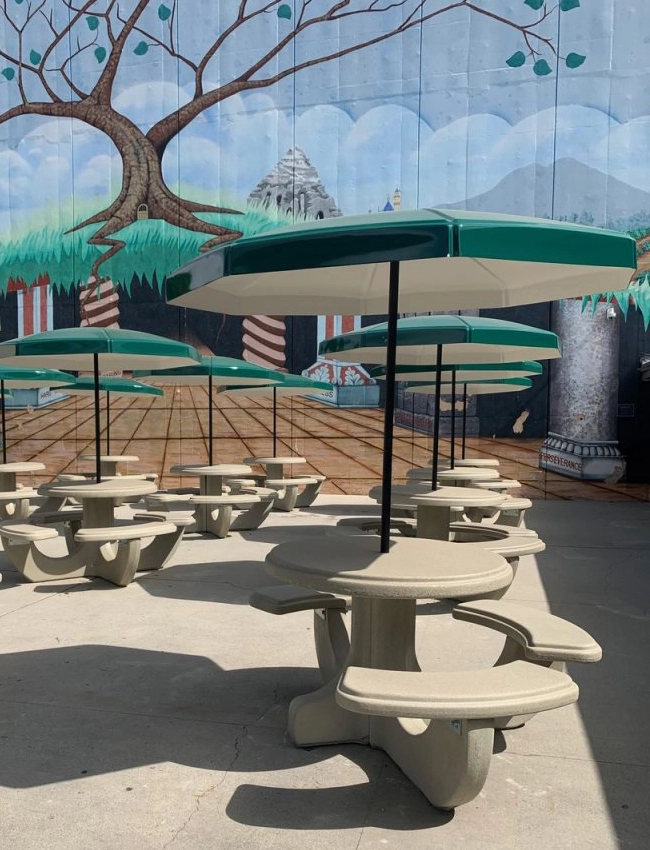
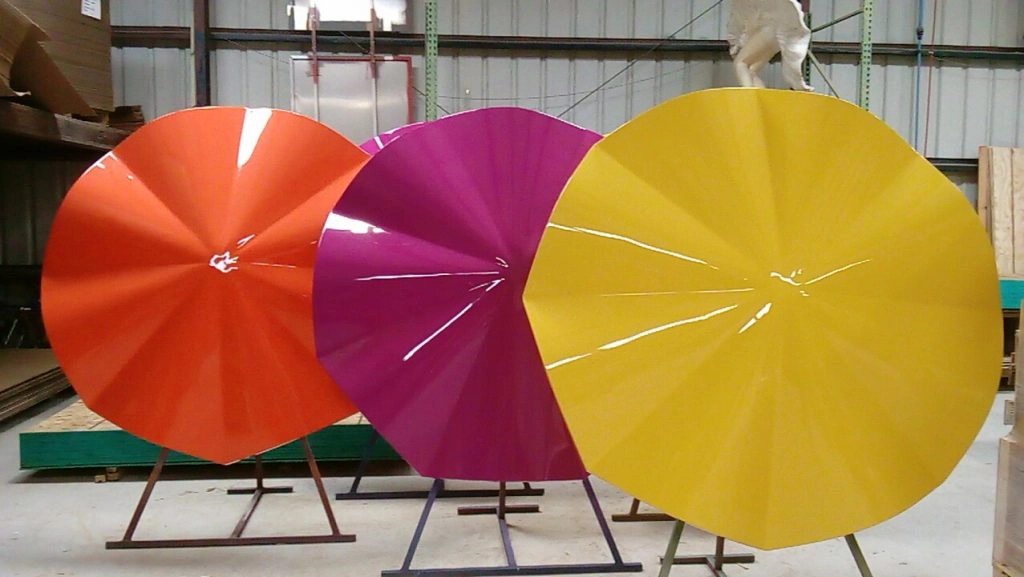
A fiberglass hard-top umbrella has a rigid, molded fiberglass canopy rather than a flexible fabric covering. The canopy generally stays open and maintains a consistent shape. It can be a strong fit for established outdoor dining areas, school courtyards, and themed hospitality spaces where a distinctive, fixed shade feature is desired.
Explore fiberglass hard-top canopy umbrellas to see available styles.
What Is a Commercial Fabric Patio Umbrella?
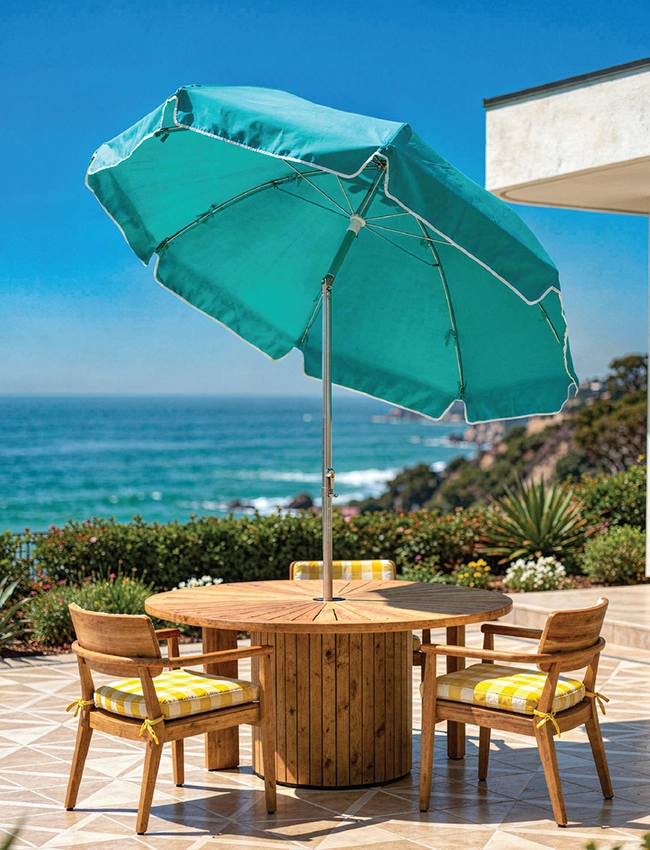
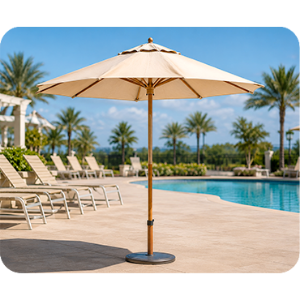
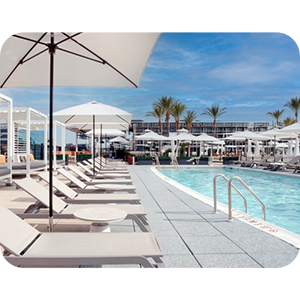
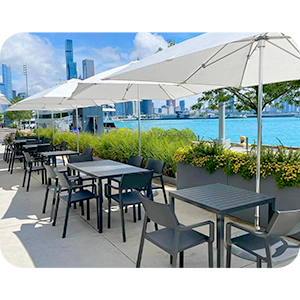
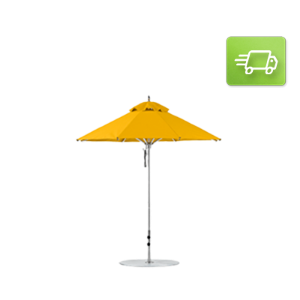
Commercial fabric umbrellas stretch an outdoor-rated textile over a supporting frame. Many models open and close, and some can tilt or be repositioned. They suit spaces where seating arrangements and shade needs change during the day.
Important: An umbrella with fiberglass ribs and a fabric canopy is still a fabric umbrella. A fiberglass hard-top umbrella has a rigid canopy made from molded fiberglass.
Fiberglass Hard-Top vs. Fabric Umbrellas: Side-by-Side Comparison
| Feature | Fiberglass Hard-Top | Fabric Patio Umbrella |
|---|---|---|
| Canopy construction | Rigid, usually one-piece fiberglass | Flexible textile over folding or fixed frame |
| Operation | Generally remains open | Many models open and close |
| Service-life examples | 15+ years reported for certain commercial models | 5–10 years as a planning estimate; longer with proper care |
| Example product weights | Approximately 55–110 lb for selected models | Approximately 22–45 lb for selected models |
| Wind management | Fixed exposed canopy; engineered anchoring critical | Many can close; follow model-specific limits |
| Repairs | Shell repairs or replacement can be specialized | Some canopies and frame parts are replaceable |
| Replacement shipping | Rigid canopy may need oversized freight | Parts may ship in smaller cartons |
| Cleaning | Solid-surface cleaning and hardware inspection | Textile cleaning, drying, frame inspection |
| Shade adjustment | Typically fixed coverage | Tilt or repositioning on select models |
| Best suited to | Planned, permanent-looking shade locations | Changing layouts and flexible operations |
Lifespan and weight figures are illustrative planning ranges, not guarantees or universal product specifications. Compare the exact models under consideration.
Durability and Longevity: Which Holds Up Better?
Fiberglass hard-top construction and service life
A molded fiberglass canopy holds its shape without sewn seams, fabric pockets, or a folding canopy mechanism. Some commercial fiberglass models have reported service lives of 15 years or longer under suitable conditions. That figure is a product-specific estimate, not a guaranteed lifespan for every installation. The protective finish, pole, mounting hardware, and anchors still require routine inspection, and impact damage may shorten service life.
Commercial fabric construction and service life
Commercial fabric umbrellas commonly use outdoor textiles such as solution-dyed acrylic, which incorporates pigment into the fibers to support color retention. Frame quality, stitching, and replacement-part availability are equally important. A frequently used planning estimate is approximately 5–10 years for a commercial fabric umbrella, with longer service possible through cleaning, timely repairs, careful operation, and dry off-season storage. This is not a verified industry-wide average: the fabric canopy may need replacing before the supporting frame does.
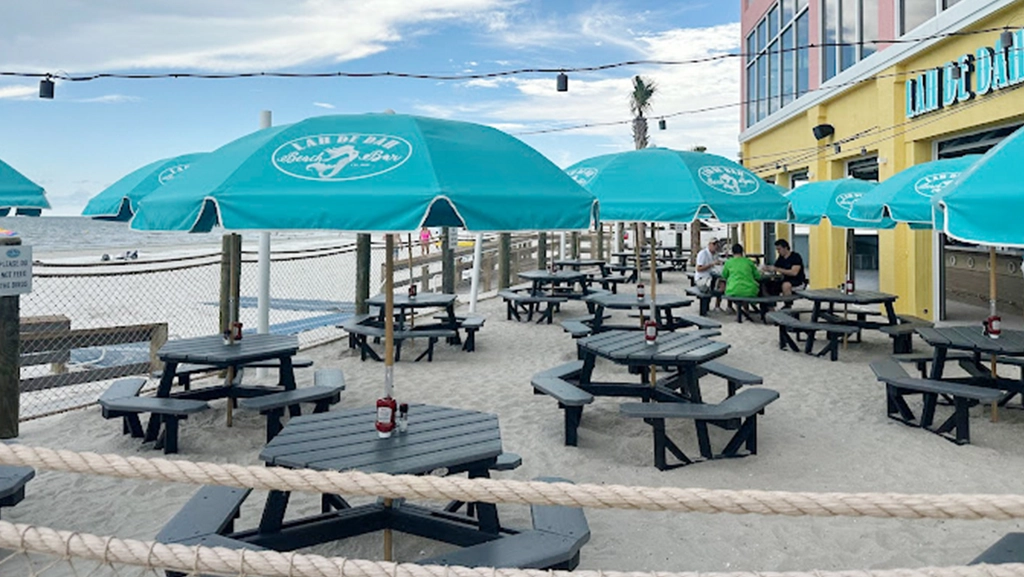
Weather Resistance: Sun, Rain, and Wind
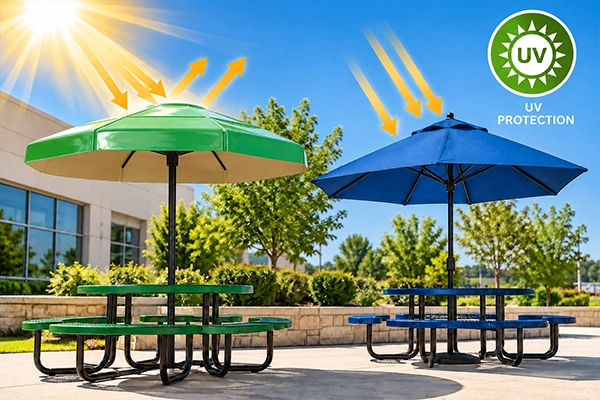
Sun Exposure
Both rigid fiberglass canopies and commercial umbrella fabrics can offer strong protection against sunlight. Fiberglass performance depends on the quality of its UV-resistant finish, while solution-dyed fabrics incorporate color throughout the fibers to help limit fading. Shade effectiveness also depends on canopy size, shape, and sun angle. For high-exposure locations, compare finish quality, fabric specifications, and recommended care before choosing a model.
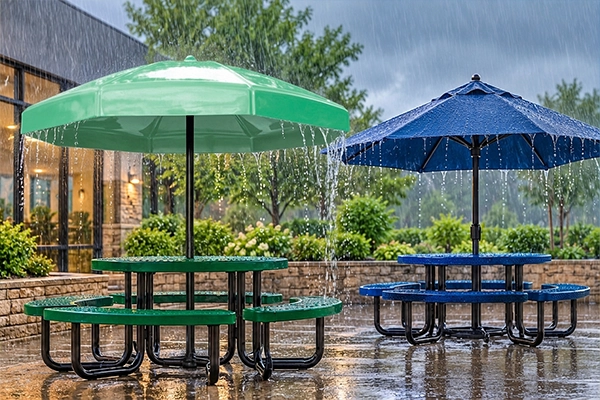
Rain and Moisture
A molded fiberglass canopy sheds water across a solid surface, although its shape and installation determine where runoff falls. Commercial fabric canopies may use water-repellent finishes or tightly woven outdoor textiles, but seams and aging treatments can affect performance. Both options benefit from regular cleaning and inspection. Neither should be assumed to provide the weather protection of a permanent roof, particularly during heavy or wind-driven rain.
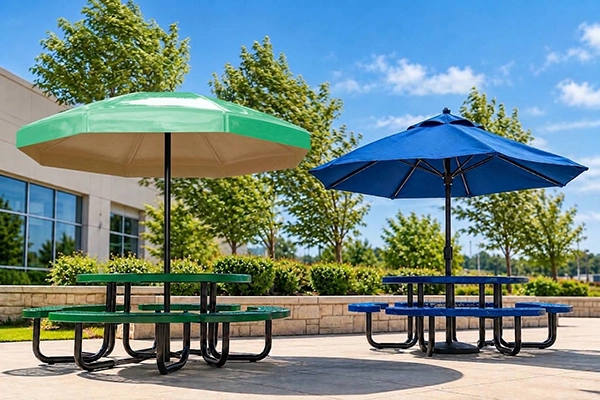
Wind Performance
Wind pushes against the canopy and transfers force to the pole, hardware, and anchors. Rigid fiberglass canopies generally remain open, while many fabric models can close. Published wind ratings vary by model, mounting configuration, and test conditions; confirm the manufacturer’s documentation before comparing performance. Always follow the manufacturer’s installation, closure, and severe-weather instructions; published ratings are not guarantees of safe use in storms.
Cleaning and Maintenance
Fiberglass hard-top umbrellas
A smooth, non-textile canopy can usually be cleared of loose debris and washed with mild soap and water, when suitable for the finish. Staff should also check the finish for chips or cracks and inspect the pole, fasteners, and mounting connections. Avoid abrasive cleaners unless expressly approved.
Fabric patio umbrellas
Fabric care typically involves brushing off dry debris, spot-cleaning with products approved for the textile, and allowing the canopy to dry before closing or storing it. Seams, ribs, lift cords, and opening mechanisms also benefit from routine inspection. Some fabrics require specific care to preserve water-repellent treatments.
Shade Coverage and Guest Comfort
Shade coverage is primarily a geometry and layout question. Canopy width, mounting height, table placement, and the sun's angle determine where shade falls; a large canopy does not necessarily shade every chair throughout the afternoon. For example, low-angle sun can reach guests beneath either material, especially along the west side of a dining area.
A hard-top umbrella maintains the same canopy position, making it useful for repeatable table layouts. Some fabric models include tilt or rotation features that can help respond to changing sun angles, although these features are not standard on every commercial umbrella. Compare actual canopy dimensions and clearance requirements before planning table spacing.
Design and Customization
Fiberglass hard-top umbrellas offer a recognizable molded profile. Depending on the product, canopy shapes, decorative surface patterns, and color options can help create a consistent identity across an outdoor dining area. A rigid canopy also maintains its design when the facility is closed because it does not fold away.
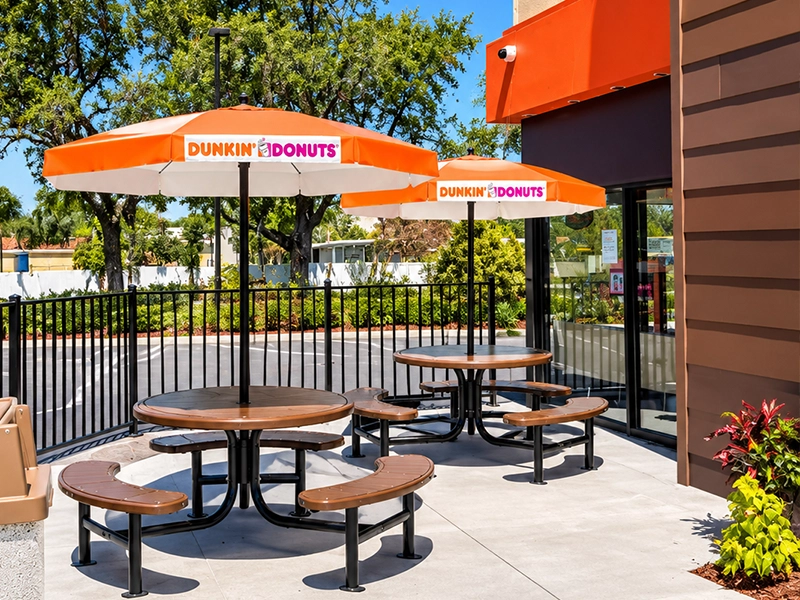
Fabric umbrellas provide a different design toolkit: textiles can be offered in solid colors, stripes, patterns, and—in certain programs—printed branding. Fabric selection also influences texture and the visual softness of a space. Availability of custom graphics or replacement fabric varies by product.
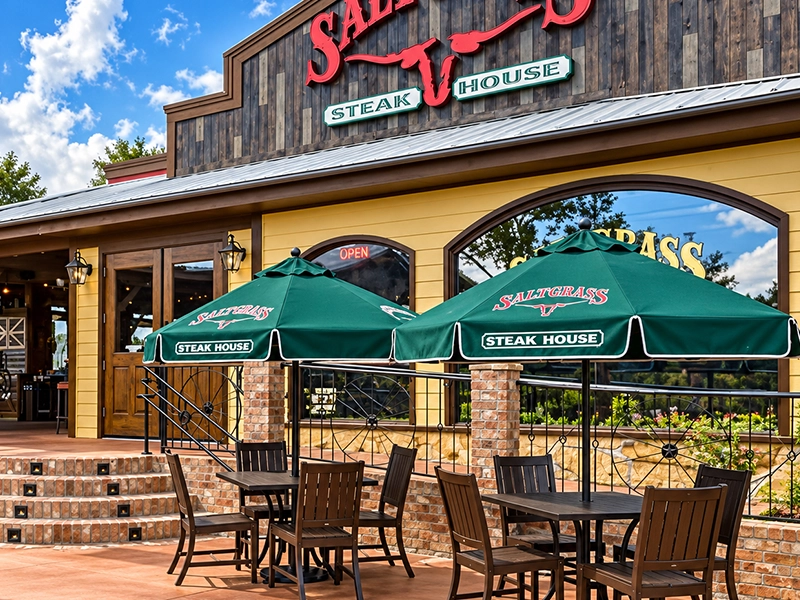
For facilities coordinating tables and shade, our Custom Fiberglass Picnic Table and Umbrella Guide explains the considerations behind a coordinated fiberglass furniture program.
Installation and Flexibility
A rigid hard-top umbrella is typically planned around a designated table or anchor point. Confirm pole compatibility, clearances, mounting hardware, substrate strength, and the installation instructions before ordering. Because the canopy remains extended, moving the umbrella or preparing for severe weather requires different planning than with a folding model.
Many commercial fabric umbrellas fold for daily closure and off-season storage, although heavy bases and permanent mounts can limit mobility. A folding design also makes some units easier to pack and transport.
Weight and handling considerations
Examples of fiberglass hard-top models weigh approximately 55–110 pounds, with some models around 65 pounds. Selected folding fabric umbrella examples weigh approximately 22–45 pounds. These are illustrative product ranges, not representative averages; dimensions, pole materials, accessories, and mounting components affect actual weights.
Replacement shipping and repairs
A one-piece fiberglass canopy remains large even when shipped separately, so replacement may require oversized freight, protective packaging, and extra handling. In contrast, some fabric umbrella canopies, ribs, hubs, and lift components can be shipped as smaller replacement parts. Certain folded umbrellas may ship two per carton, but packaging quantities depend on the specific model and supplier.
Upfront Cost vs. Long-Term Value
The purchase price is only one part of the cost of commercial shade. A useful comparison includes the umbrella, approved mounting system, installation labor, routine cleaning, repairs, storage, and eventual replacement.
Fiberglass hard-top umbrellas may offer a long-lived rigid canopy with fewer textile-related wear points, especially at permanently assigned tables. Their tradeoff is that a damaged one-piece canopy can be bulky to replace and may incur oversized freight charges. Fabric umbrellas can offer serviceable frames and replaceable textile canopies or mechanisms, which may avoid replacing the entire unit when one component wears out. Parts availability varies, however, and premium fabric models can have high upfront costs.
For a meaningful comparison, request the installed price and ask for replacement canopy or parts pricing, freight requirements, replacement availability, and recommended care procedures. The lowest purchase price is not always the lowest ownership cost.
Which Commercial Patio Umbrella Should You Choose?
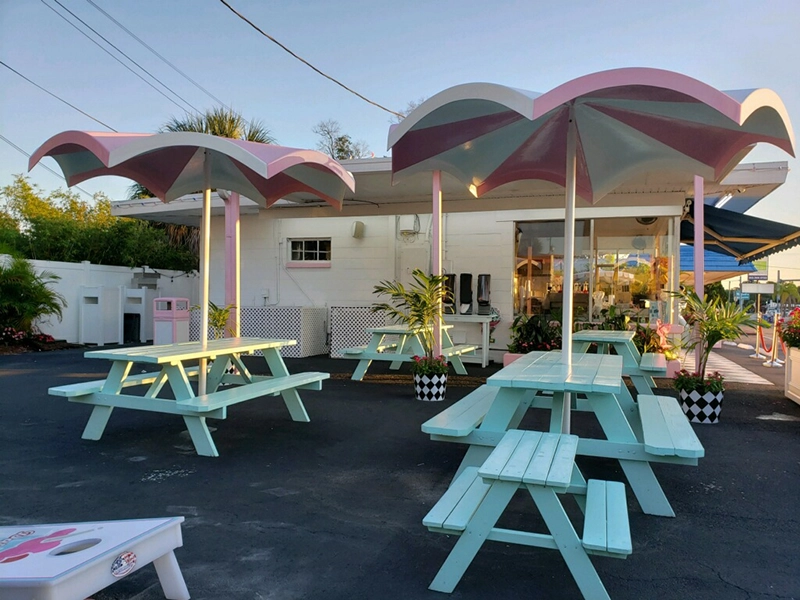
Consider fiberglass hard-top for established dining areas
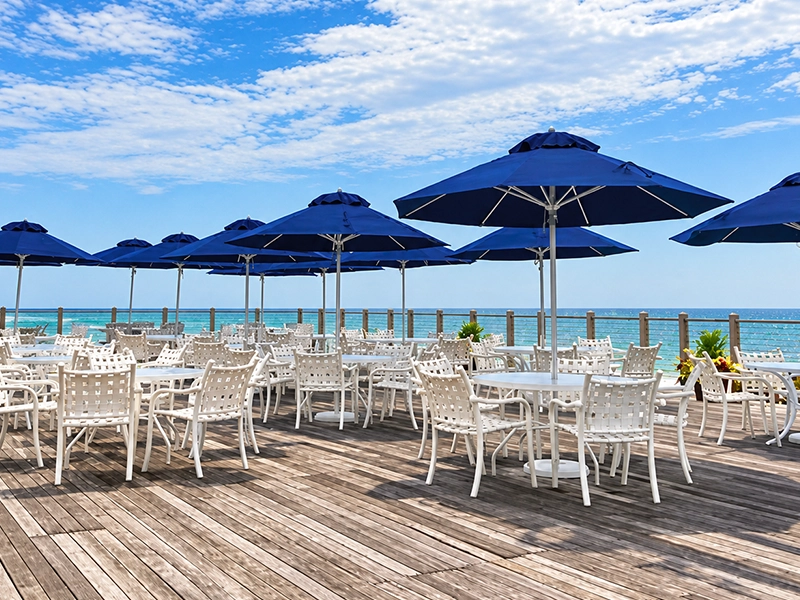
A restaurant with permanently positioned picnic tables may prefer a rigid canopy that maintains a consistent profile and complements coordinated fiberglass furniture. This works best when mounting and access can be planned before installation.
Consider fabric for frequently changing layouts
A café that rearranges tables or closes its outdoor seating after service may benefit from a folding umbrella. Some models also offer tilt features and replaceable canopies, which can help accommodate shifting shade needs and simplify certain repairs.
Questions to Ask Before Buying
- What canopy size and mounting height shade the occupied seats at the busiest time of day?
- What base or anchoring system is approved for the exact model and site conditions?
- What are the documented wind limits and required closure or severe-weather procedures?
- Which components can be replaced, and how are replacements shipped?
- Can the canopy, frame, or hardware be repaired or replaced separately?
- Will the umbrellas need to be moved, folded, or stored seasonally?
Frequently Asked Questions
Are fiberglass hard-top umbrellas better than fabric umbrellas?
Not universally. Fiberglass suits rigid, fixed-position shade, while fabric models often offer greater flexibility and collapsibility.
Can fiberglass hard-top umbrellas stay outdoors year-round?
Some are designed for extended exposure, but suitability depends on the model, anchoring, climate, and product care instructions.
Do fiberglass umbrellas fade?
UV-resistant finishes can reduce fading, but no outdoor finish should be assumed completely fade-proof.
Are fabric patio umbrellas waterproof?
Some fabrics are water-resistant; waterproof performance depends on fabric and seam specifications.
Which is better in windy areas?
Both umbrella types require proper anchoring and attention to model-specific wind ratings. Fiberglass hard-top canopies remain exposed to wind, while many fabric umbrellas can close to reduce wind load. Choose based on the installation requirements and operating procedures for your location.
Can fiberglass hard-top umbrellas be customized?
Many fiberglass hard-top umbrellas can be customized with a selection of canopy colors and, on eligible models, logos or other branding options. These choices can help restaurants, schools, and other commercial facilities create a coordinated outdoor space. Explore our Custom Fiberglass Picnic Table and Umbrella Guide for more ideas.
Do fiberglass hard-top umbrellas need a base?
Mounting varies by model. Some use table or anchored mounting systems; verify installation requirements before ordering.
Find the Right Commercial Umbrella for Your Facility
Choose fiberglass hard-top umbrellas for a distinctive rigid canopy at planned shade locations, or explore fabric umbrellas when flexibility is the priority. Compare the available options and request a quote for your project.
Browse Fiberglass Hard-Top Umbrellas | Browse Contract Umbrellas



Leave your comment