










Playground Ladder Climbers for Commercial Playgrounds
Playground ladder climbers provide classic, skill-building climbing challenges that help children develop strength, coordination, and balance through controlled vertical and lateral movement. Designed for commercial playground environments, these structures are ideal for schools, parks, childcare centers, and community playgrounds where durability and active play value matter most. Unlike overhead climbing equipment, ladder climbers focus on climbing up, down, and across, giving children a structured way to build confidence while improving motor planning and full-body coordination. From straight ladder designs to angled and side-traverse configurations, these climbers add a versatile and space-efficient challenge to playground layouts.


1 Pod Free Standing Pod Playground Climber - Ages 2 to 12 yr


2 Pods Free Standing Pod Playground Climber - Ages 2 to 12 yr


3 Pods Free Standing Pod Climbing Playground Equipment - Ages 2 to 12 yr


4 Pods Free Standing Pod Climbing Playground Equipment - Ages 5 to 12 yr


5 Pods Free Standing Pod Playground Climber - Ages 5 to 12 yr

Curved Post Straight Rung Vertical Playground Ladder - Ages 2 to 5 yr

Curved Post Bent Rung Vertical Playground Ladder - Ages 5 to 12 yr

Curved Post Maze Rung Vertical Ladder Playground Climbing Wall - Ages 5 to 12 yr

Single Hump Camel Jr. Playground Climber with Powder Coated Steel Frame - Freestanding Play


6 Pods Free Standing Pod Playground Climber - Ages 5 to 12 yr


Sunrise Climbing Playground Equipment - Ages 5 to 12 yr


Single Post Chain Playground Climbing Wall - Ages 5 to 12 yr


Mikros Pod Playground Climber - Set of 4 - Ages 2 to 12 yr


Curved Ladder Climber Playground Climbing Structures - Ages 5 to 12 yr
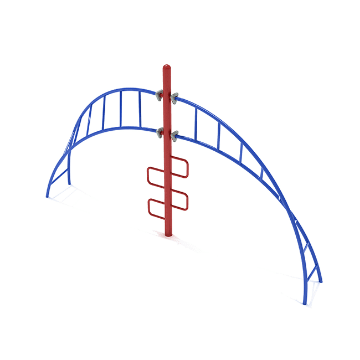

Curved Helix Ladder Climbing Playground Equipment - Ages 5 to 12 yr


Chain Climbing Wall for Playgrounds with Powder Coated Steel Frame - Freestanding


Mountain Climber for Playground - Ages 5 to 12 yr


Curved Post Chain Wall Climbing Playground Equipment - Ages 5 to 12 yr


Camel Back Playground Climber with Powder Coated Steel Frame - Freestanding


5 Foot Single Left Turn Sectional Freestanding Slide with Snake Climber - Ages 5 to 12 yr

3 -Section Chain Link Wall Freestanding Playground Climber - Ages 5 to 12 yr

Megas Pod Climbing Playground Equipment - Set of 4 - Ages 5 to 12 yr


Single Post Triple Wing Playground Climber - Ages 5 to 12 yr


Serpent Pod Climbing Playground Equipment - Set of 9 - Ages 5 to 12 yr
Types of Playground Ladder Climbers
Vertical Ladder Climbers
Traditional upright ladder-style climbers allow children to move steadily upward and downward while developing balance and lower- and upper-body coordination.
Angled Ladder Climbers
Angled ladder climbers offer a slightly more dynamic climbing experience, encouraging weight shifting and balance control as children climb along a sloped path.
Side Traverse Ladder Climbers
These designs allow children to move laterally across ladder-style rungs, helping build coordination, grip strength, and spatial awareness while staying closer to the ground.
How to Choose the Right Ladder Climber
Age Group & Skill Level
Lower and more compact ladder climbers are often well-suited for younger children, while taller or more complex configurations provide added challenge for ages 5–12. Choosing the right level of difficulty helps create progressive skill development within the playground.
Use Zone & Playground Layout
Ladder climbers require adequate clearance around the structure to allow safe climbing and dismounting. Consider how the climber fits within the overall flow of the playground and whether it serves as a transition element between play zones.
Fall Height & Surfacing
The required surfacing beneath a ladder climber depends on the structure’s fall height. Commercial playground installations commonly reference guidance from ASTM International and the U.S. Consumer Product Safety Commission when planning safety surfacing and equipment layouts.
Freestanding vs Connected Components
Some ladder climbers are designed as standalone play events, while others function as connectors between larger play structures. Understanding the role the climber plays in your layout helps determine the best style and placement.
Benefits of Ladder Climbers
Ladder climbers promote structured physical development by encouraging children to move in predictable yet challenging ways. As children climb upward, downward, and across, they strengthen muscles, improve coordination, and build confidence through repeated success.
These climbers also support social interaction and turn-taking while providing a clear and familiar climbing experience that works well in both compact and large playground footprints.
Ideal Locations
Playground ladder climbers are a great fit for:
School playgrounds
Public parks and recreation areas
Daycare and early learning centers
HOA and apartment community playgrounds
Their straightforward design and adaptable difficulty levels make them a reliable addition to high-use commercial play environments.
FAQ
What is a playground ladder climber?
A playground ladder climber is a structure made of evenly spaced rungs or bars that children climb vertically or across to develop strength, balance, and coordination.
What age group are ladder climbers best for?
Many ladder climbers are designed for ages 5–12, though smaller or lower designs may be appropriate for younger children, depending on the layout and supervision.
How is a ladder climber different from monkey bars?
Ladder climbers focus on climbing up, down, and across using both hands and feet, while monkey bars involve hanging and moving hand-over-hand overhead.
How much space is needed around a ladder climber?
A clear use zone is required around the structure to allow safe climbing and dismounting. The exact space depends on the climber’s height and layout.
What type of surfacing is needed under a ladder climber?
Impact-attenuating playground surfacing is required beneath and around ladder climbers, with depth and material determined by the structure’s fall height.