





From resort retreats to busy waterparks, the right commercial pool furniture creates comfortable outdoor spaces while supporting the daily demands of a busy facility. This guide compares seating types, materials, layout considerations, maintenance, and purchasing priorities for hotels, resorts, HOAs, apartments, waterparks, and universities.
What's on This Page
Why Choosing Commercial Pool Furniture Matters
Pool decks are shared environments where chairs and tables may be moved, cleaned, and used repeatedly throughout the day. Sunlight, moisture, sunscreen, and routine handling all influence how furnishings perform over time. Commercial-use suitability depends on the complete product—not simply its material or appearance.
Compare frame construction, comfort, cleaning requirements, storage, accessibility, replacement options, and the expected conditions at your property. Start with the commercial pool and patio furniture collection to see available categories.
Choosing Pool Furniture for Different Facilities
Hotels and Resorts
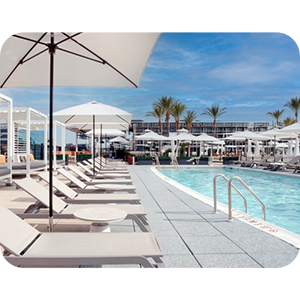
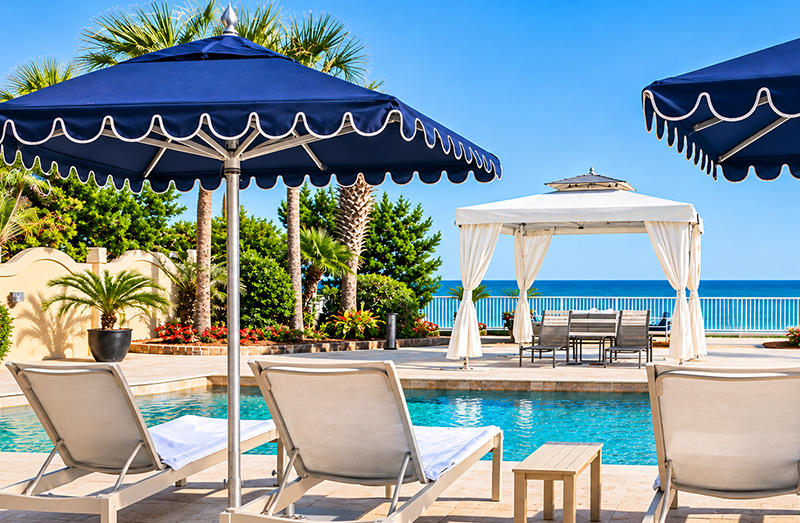
Hospitality pool decks are extensions of the guest experience. Adjustable chaise lounges support relaxation, while side tables and upright dining groups accommodate refreshments and conversation. Coordinate colors and furniture profiles, but also consider cleaning access, shade and how guests move between different seating zones.
HOAs and Apartment Communities
Shared residential pools need to serve different ages and schedules. A combination of chaise lounges, upright chairs and tables can accommodate sunbathing, supervision and social gatherings. Property managers should compare stackability, replacement-part availability and the ease of keeping furniture looking consistent as individual pieces are replaced.
Waterparks and Aquatic Attractions
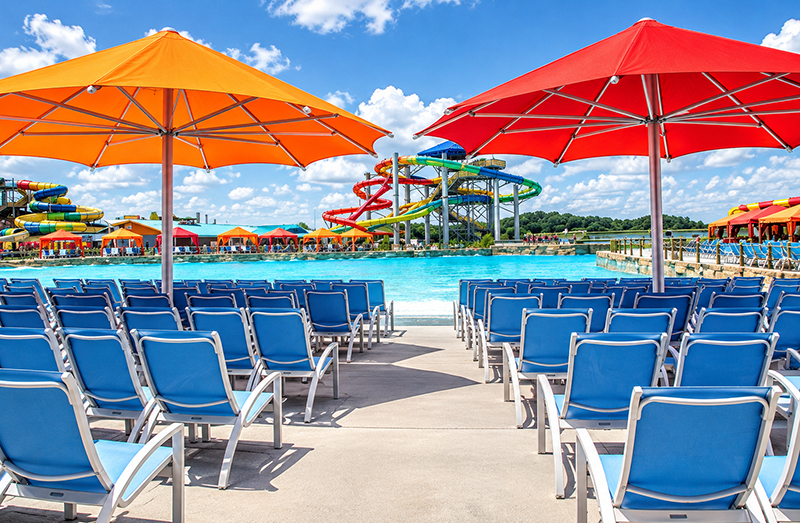
Waterparks serve large numbers of visitors who move between attractions, dining areas and places to relax. Durable chaise lounges, upright chairs and side tables can support family seating areas, while dining groups provide space for refreshments. Prioritize surfaces that are practical to clean, furniture that staff can reposition or store efficiently, and layouts that preserve lifeguard sightlines, queue circulation, accessible routes and emergency access.
Colleges and Universities
Campus pools often serve more than one purpose. Competitive aquatic facilities may prioritize flexible deck space and practical seating, while student recreation and housing pools may benefit from loungers, shaded tables and social seating groups. Choose furnishings around the specific activities and expected frequency of use.
Community and Municipal Pools
Public pools serve a broad range of visitors. Provide a mix of seating styles where appropriate, maintain accessible routes and coordinate furniture placement with lifeguard visibility, emergency access and the facility's operating requirements.
Types of Commercial Pool Furniture
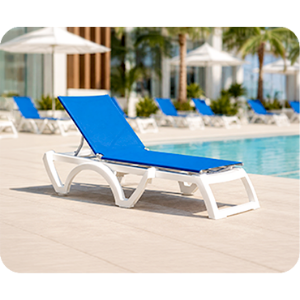
Chaise Lounges
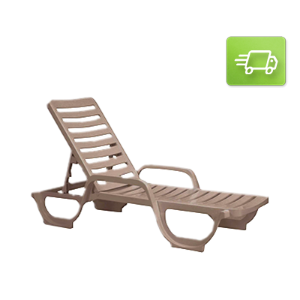
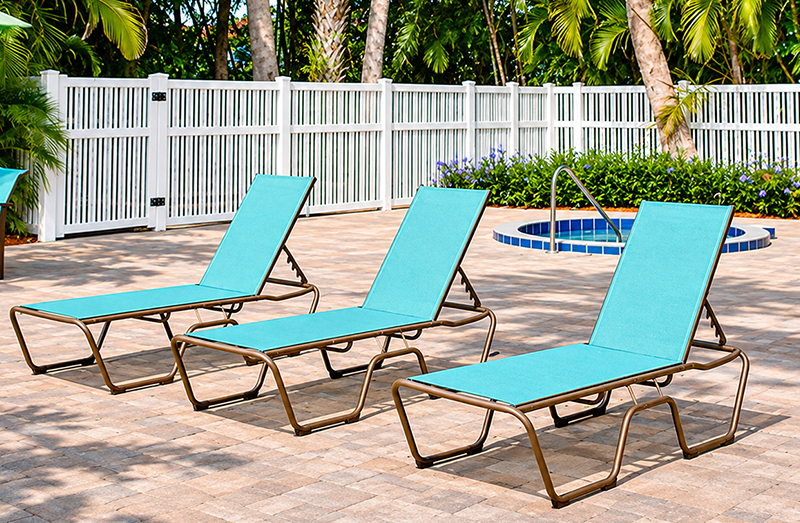
Reclining seating for relaxation areas. Compare adjustment positions, seat height, dimensions and stackability.
Poolside Chairs
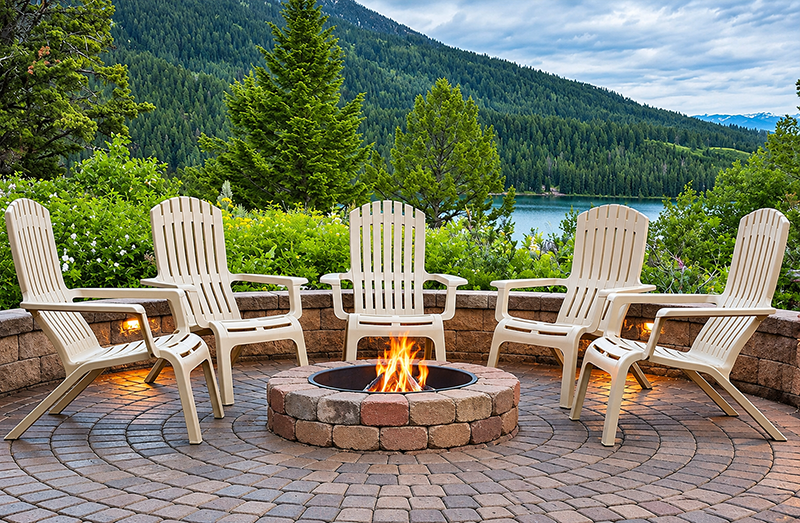
Upright seating for conversation, supervision and casual gatherings. Evaluate armrests and usable seat dimensions.
Dining Tables
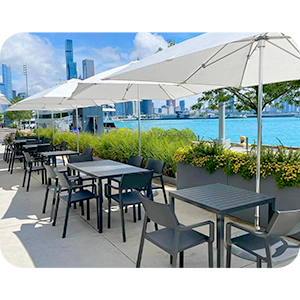
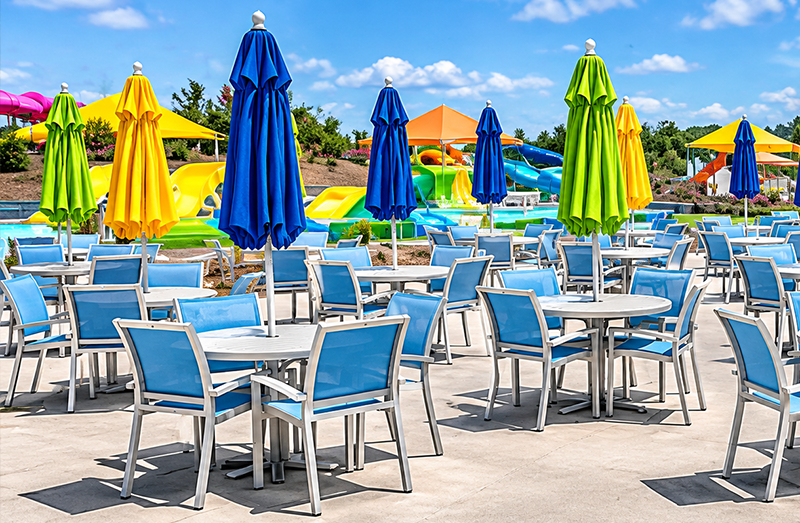
Tables for snacks and gathering spaces. Verify chair compatibility, base stability and umbrella provisions.
Side Tables
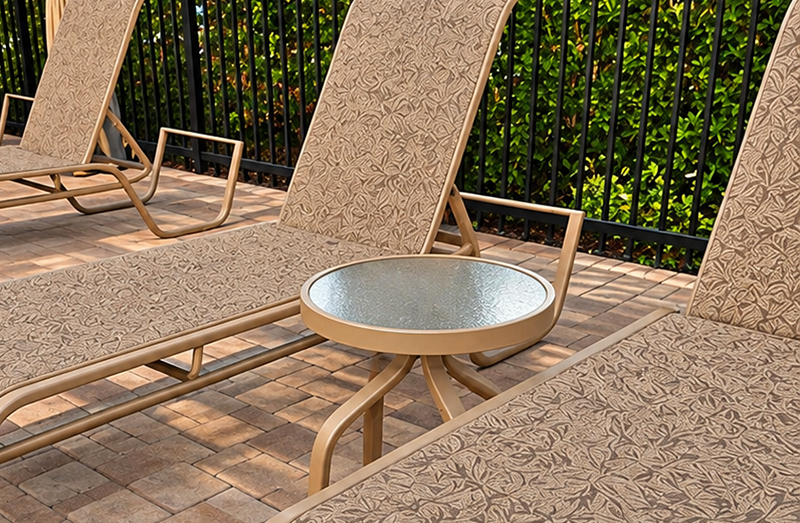
Convenient surfaces for refreshments and personal items without the footprint of a dining set.
Comparing Commercial Pool Furniture Materials
Vinyl Strap
Flexible straps create an open seating surface that allows water to pass through. Depending on the model, individual straps may be replaceable. Compare strap construction, frame finish and recommended cleaning procedures.
Sling
Tensioned outdoor fabric offers supportive seating without separate cushions. Examine fabric specifications, seams, frame design and replacement-sling availability for the particular model.
Plastic Resin
Resin chairs, chaise lounges and tables are available in molded and multi-component designs. Some models stack for storage. Confirm commercial-use suitability rather than assuming all resin products have the same performance.
Aluminum
Aluminum frames combine relatively low weight with natural corrosion resistance. Finish quality, hardware, joints and environmental exposure remain important, particularly in coastal locations.
Recycled Plastic and Marine-Grade Polymer
These materials provide additional outdoor furniture options. Compare the specific formulation, UV-related specifications, weight, fasteners and care instructions before selecting a model.
| Material | Selection Consideration | Maintenance Focus |
|---|---|---|
| Vinyl strap | Flexible, open seating | Strap condition and tension |
| Sling | Supportive fabric seating | Fabric, seams and tension |
| Plastic resin | Molded designs; some stack | Surface condition and cracks |
| Aluminum | Lightweight frame options | Finish, joints and hardware |
| Recycled plastic | Solid outdoor components | Fasteners and surface cleaning |
| Marine-grade polymer | Polymer-based furniture | Model-specific care guidance |
Planning a Functional Commercial Pool Deck
Establish Seating Zones
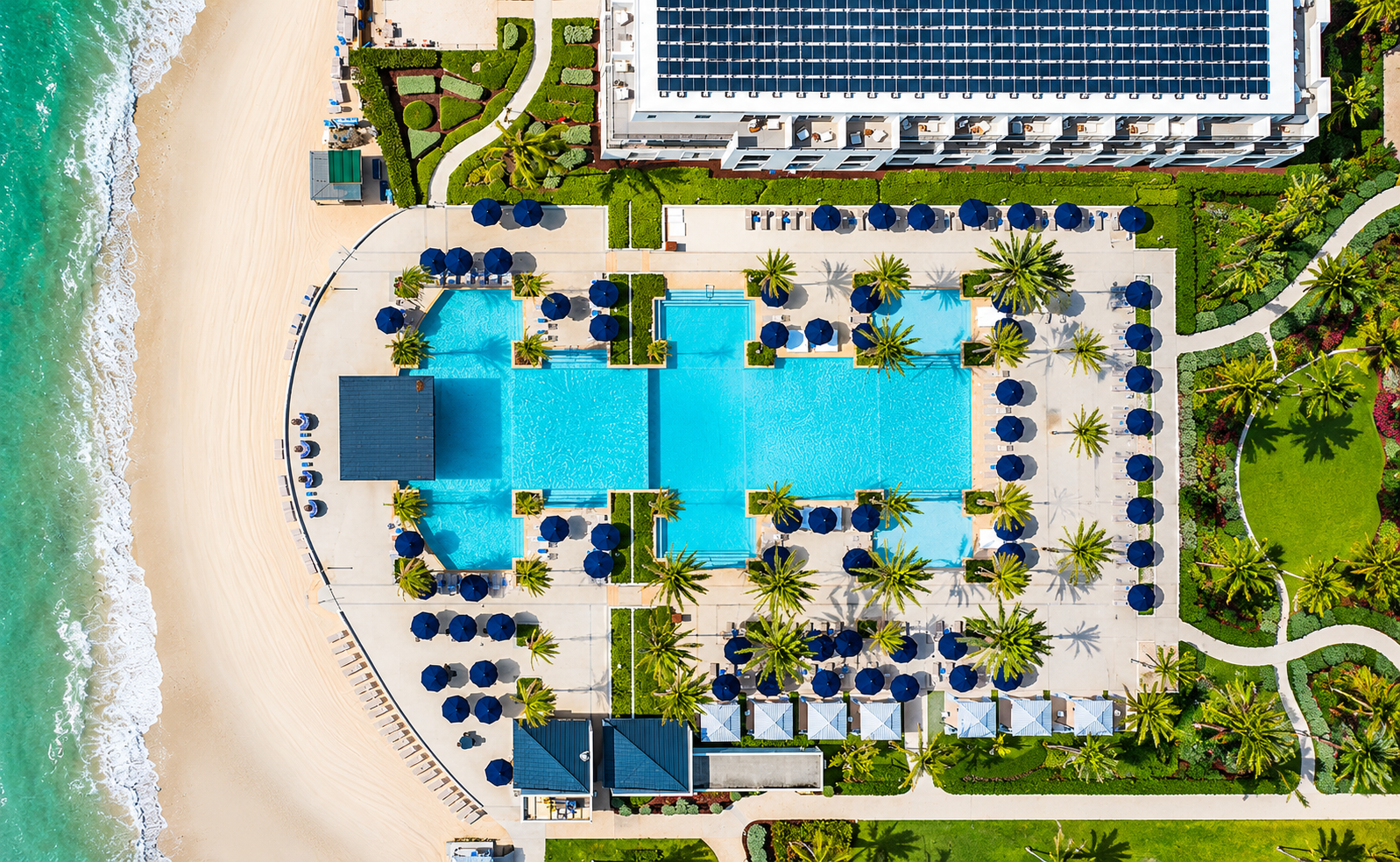
Use chaise lounges in relaxation areas, upright chairs and tables for conversation, and shade where it supports guest comfort. At waterparks, keep lounge and dining areas clear of attraction queues and essential circulation. At university aquatic centers, separate social seating from instructional or competitive swimming operations where necessary.
Measure Before Choosing Quantities
Map pool edges, gates, ladders, drains, buildings and other fixed elements. Use actual product dimensions, including the footprint of a fully reclined chaise lounge and the space needed to move around occupied chairs. Do not use an unverified universal spacing formula.
Preserve Accessibility and Operational Access
Keep required accessible routes, pool entries, exits and emergency equipment unobstructed. Evaluate accessible dining and gathering options where appropriate, and confirm applicable codes and facility-specific requirements.
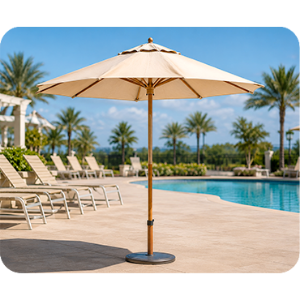
Plan Shade and Umbrella Placement
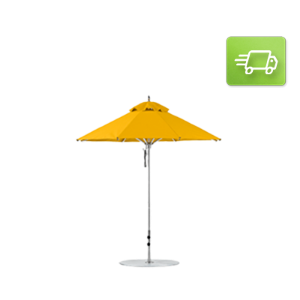
Compare canopy dimensions, mounting compatibility, base requirements and wind-management instructions. An umbrella hole in a table does not automatically eliminate the need for a suitable base or mounting system.
Comfort, Storage and Maintenance
Offer Different Seating Experiences
Low chaise lounges suit reclining, but upright chairs may be easier for other visitors to use. Compare seat heights, armrests, usable seat dimensions and stability to provide a practical mix.
Verify Stacking and Storage
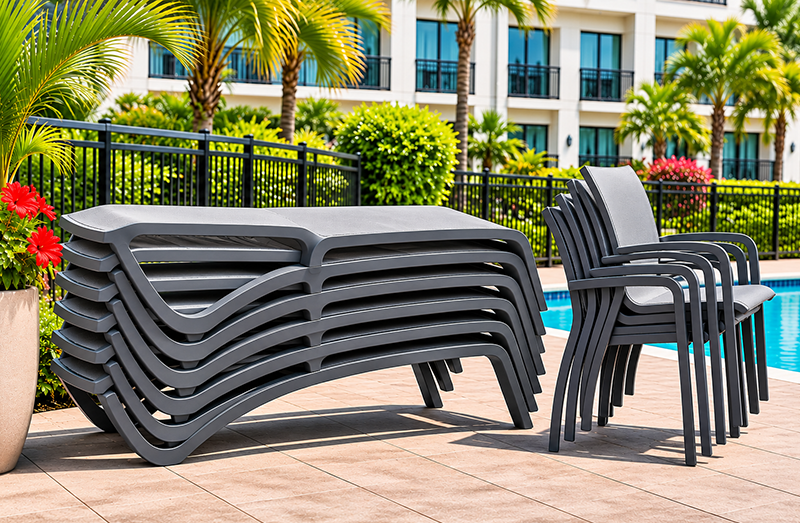
Not every commercial chair or chaise lounge stacks. Check the specific stacking limit, storage footprint and handling requirements before ordering.
Build a Routine Care Program
Follow manufacturer-approved cleaning methods and inspect seating surfaces, frames, fasteners and furniture stability regularly. Remove damaged pieces from service until repaired or replaced. Check whether straps, slings or hardware can be ordered separately.
Upfront Cost vs. Long-Term Value
Consider more than the purchase price. Freight, assembly, cleaning, storage, repairs, replacement parts and eventual replacement all affect the cost of ownership. A resort may prioritize comfort and visual coordination, while a waterpark may place greater value on easy cleaning, efficient storage and flexible seating arrangements.
Commercial Pool Furniture Buying Checklist
What to Prepare Before Requesting a Quote
Provide the facility type, desired quantities, preferred furniture categories, material preferences, required dimensions, delivery location and project timeline. If matching existing furniture, identify the models or design characteristics that need to coordinate. Universities, municipalities and publicly operated waterparks should also identify any applicable procurement requirements.
Frequently Asked Questions
What is the difference between commercial and residential pool furniture?
Commercial furniture is selected for shared or frequently used settings. Compare construction, commercial-use suitability, maintenance, warranties and replacement options rather than assuming every product performs alike.
Which pool furniture material is best for hotels and resorts?
Vinyl strap, sling, resin, aluminum and polymer-based products can all be suitable. The best choice depends on guest needs, exposure, aesthetics and model-specific specifications.
What pool furniture works well for waterparks?
A mix of chaise lounges, upright chairs, side tables and dining groups can support relaxation and refreshments. Choose model-specific commercial-use construction and plan for frequent cleaning, high visitor turnover, accessible circulation and unobstructed lifeguard sightlines.
What should universities consider when buying pool furniture?
Consider whether the pool serves athletics, recreation, student housing or multiple uses. Flexible arrangements, seating variety, maintenance and accessibility may be important.
Is sling or vinyl strap easier to maintain?
Both need regular cleaning and inspection. Compare manufacturer instructions, environmental exposure and available replacement components for each model.
Can commercial pool furniture be stacked?
Some models are stackable and others are not. Verify stacking limits and storage requirements with the product specifications.
How much pool furniture should a facility purchase?
Determine quantities from usable deck space, expected visitors, actual furniture dimensions and required clearances. A scaled layout is more reliable than a universal chairs-per-guest rule.
How often should pool furniture be replaced?
There is no universal replacement interval. Inspect condition and stability regularly and follow model-specific maintenance and replacement guidance.
Related Commercial Outdoor Furniture Guides
Find Commercial Pool Furniture for Your Facility
Whether you are furnishing a hotel, HOA, apartment community, waterpark or university recreation pool, compare chaise lounges, chairs, tables and accessories that match your site's needs.
Explore Commercial Pool Furniture



Leave your comment