
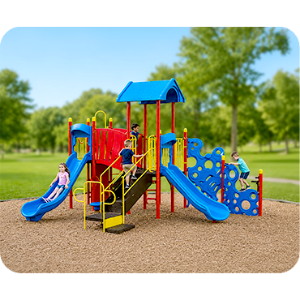




Summer is just around the corner, and with temperatures already warming up, families are beginning to frequent our parks and playgrounds once again. Before playground season gets into full swing, make sure your play area is safe, protective, and accessible by having the proper surfacing under and around your playground equipment.
Protective surfacing serves important functions for playgrounds – especially at schools, parks, resorts, and residential community areas where play equipment is offered for children up to 12 years old. In addition to creating a more traction-friendly play area with reduced slip hazards, proper safety surfacing can soften impacts from falls by dispersing the impact energy, which can turn a potentially severe injury into a minor scrape or bruise.
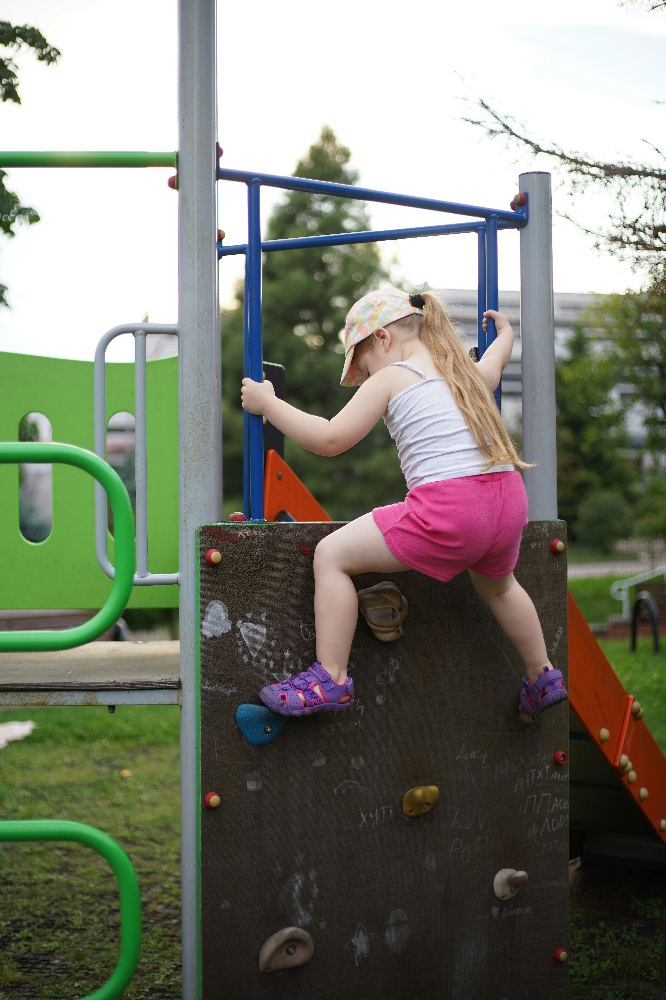 The U. S. Consumer Product Safety Commission (CPSC) has followed the potential hazards of using playground equipment for decades and published its first playground safety guidelines in 1981. Since then, the commission has revised and updated its Public Playground Safety Handbook while continuing to study incidents related to playgrounds. According to the CPSC, between 2021 and 2023, there were more than 190,000 injuries treated at emergency rooms from playground-related incidents. The most common injury-causing hazards were from equipment breaking, tipping over or poor assembly; the second most common reason for injuries was due to falls.
These statistics are too shocking to be ignored. For those who own or maintain playground equipment, your number-one goal should be to ensure children can play as safely as possible at your venue. To help you reach this objective, we’ve compiled everything you need to know about proper playground safety surfacing so you can create an ideal playground area for your children this summer.
BEST SAFETY SURFACING MATERIALS FOR PLAYGROUNDS
The CPSC maintains that one of the most important factors in reducing the chance of life-threatening head injuries from falls is to have shock-absorbing, protective surfacing under and around all elevated playground equipment where a child is unable to maintain contact with the ground during play. The different materials they recommend for playground surfaces fall under two material types: unitary surfacing material and loose fill material.
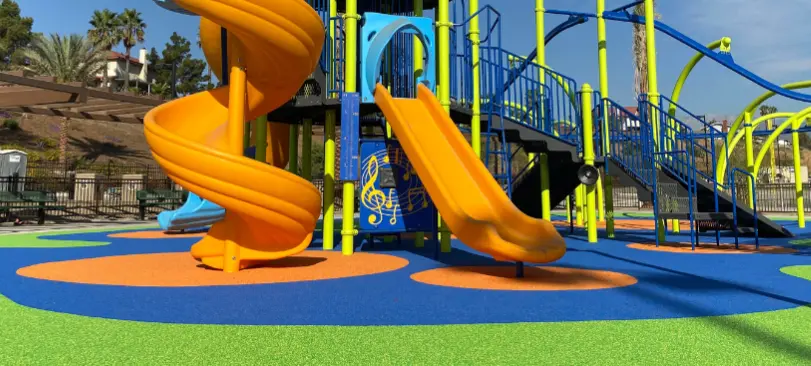
- Unitary surfacing material — Includes manufactured material such as rubber tiles, mats or poured-in-place rubber, which is a surfacing material made from recycled rubber granules bonded together to create a seamless, shock-absorbing surface.
- Loose-fill material — Consists of loose particles such as sand, pea gravel, engineered wood fibers or rubber mulch that are designed to cushion falls. Loose-fill material is not recommended around play equipment for toddlers or children who frequently place objects in their mouths.

According to the CPSC, concrete, asphalt, or other hard surfaces should never be used directly under playground equipment, nor should grass or dirt, because wear and environmental factors can reduce their shock-absorbing effectiveness.
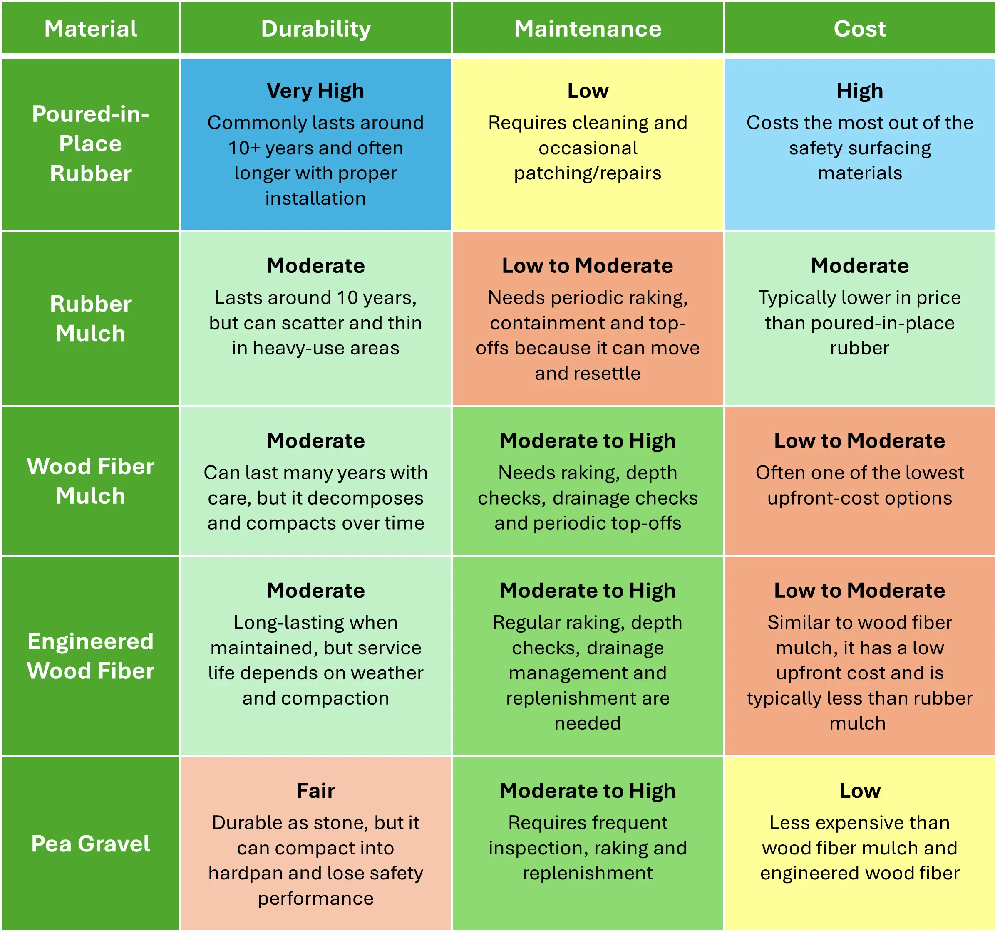
SAFETY SURFACING MATERIALS COMPARISON
When choosing the right playground surface material, there are a number of factors to take into consideration. Whether you base your decision on the material’s longevity, required upkeep, or price, we’ve laid out some details below for each material type to help you make your choice.
OTHER CONSIDERATIONS WHEN CHOOSING SAFETY SURFACING
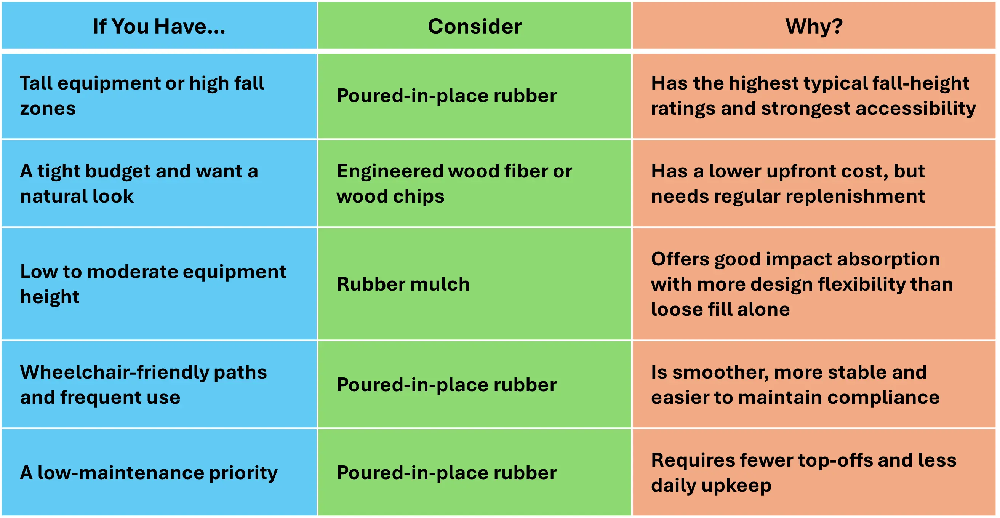
The best material for your playground also depends on the height of your equipment, who will use the playground, how much upkeep you can manage, and whether accessibility matters. Remember to take into consideration ASTM’s recommended minimum depths for laying loose-fill material, as well as their suggested maintenance schedule for each type of surface material, because the same material can perform very differently if it is compacted, displaced, or underfilled. These general considerations may help guide you in your decision:
DO YOUR PREP WORK TO CHOOSE THE BEST SURFACE MATERIAL FOR YOUR APPLICATION
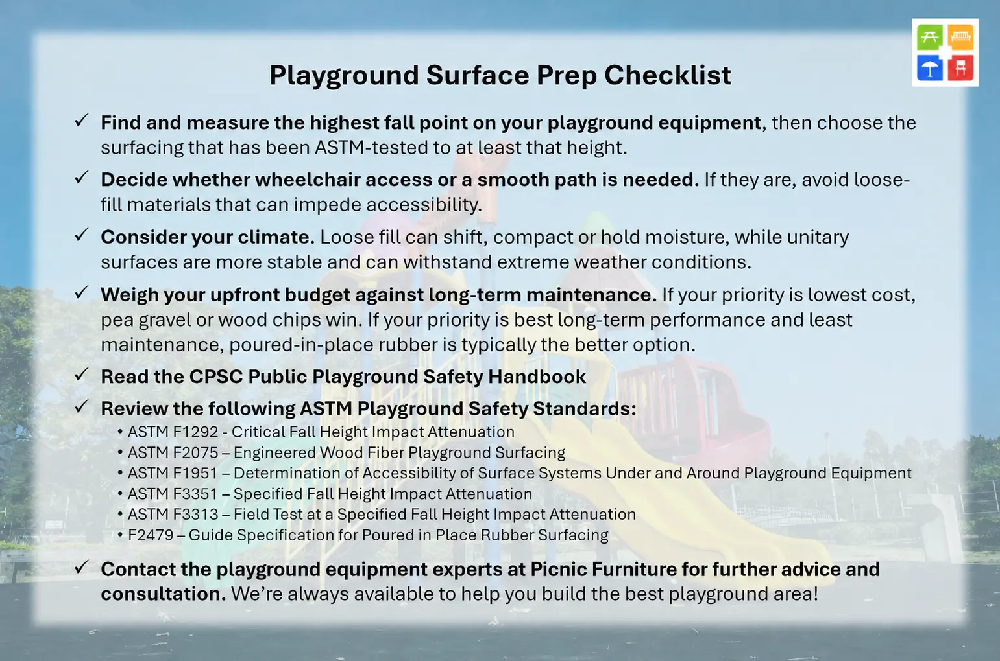
In a way, safety surfacing is like playground equipment: there are many options to choose from, so it’s up to you to do your homework, prioritize your needs and determine what will work best for your venue, your visitors and your maintenance staff. As you begin your safety surface search, use our playground surface prep checklist to gain more insight and guide you toward the ideal solution for your needs.
At Picnic Furniture, we pride ourselves on being experts in playground equipment and strive to help our customers find the perfect play options that incorporate creativity, accessibility, and fun. We now provide playground safety surfacing and can certainly provide suggested surfaces for your playground project. Call us at 800-775-8409 or chat with us online!



Leave your comment